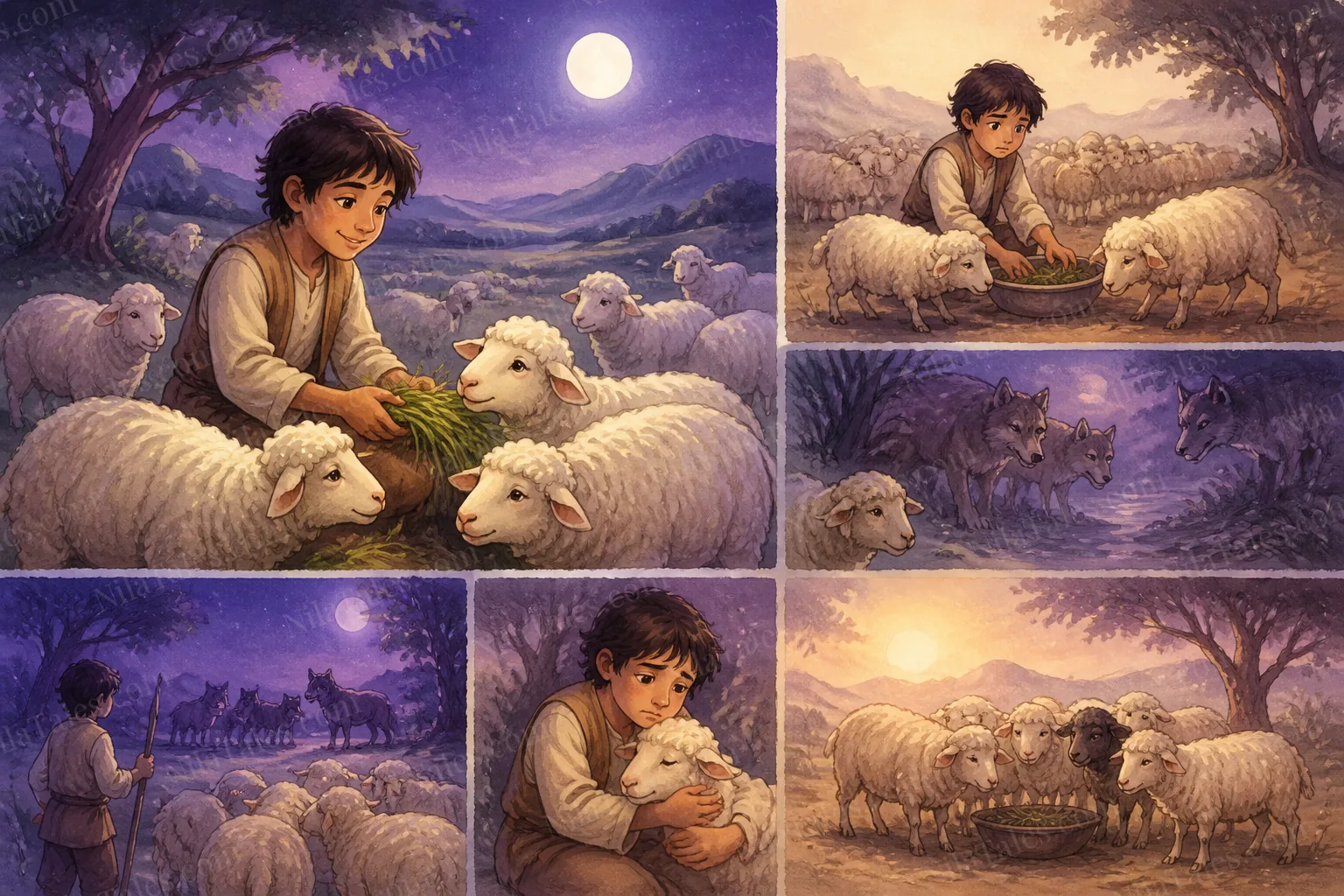
In a peaceful valley, there lived a shepherd named Ravi. He had a small flock of sheep that he cared for deeply. One summer, a long drought hit the land, and the meadows turned brown and dry. Seeing his sheep grow weak from hunger, Ravi decided to bring them the fresh, green clover from his own private garden.
One afternoon, a group of wandering wild sheep arrived at the edge of the valley. They looked thin and tired. Moved by their plight, Ravi welcomed them into his fold. He was so excited to have new companions that he made a mistake. To impress the newcomers, he began giving them the largest, juiciest portions of clover, while his original sheep received only the usual small amounts.
As the weeks passed, the wild sheep began to feel uneasy. They noticed how Ravi’s attention had shifted entirely to them, and how the older sheep were being pushed to the edges of the field. One morning, the leader of the wild sheep approached Ravi. "We are leaving, Ravi," she said quietly.
Ravi was heartbroken. "But why? I have given you the very best of my garden!" he cried. The wild sheep looked at him with sad eyes. "Your kindness is wonderful, but it is not equal. We see how you favor us over your old friends. If more new sheep arrive tomorrow, you will likely forget us too. We cannot stay in a place where kindness is not shared fairly."
Ravi stood silent, feeling a deep sting of regret. He realized that by trying to be extra kind to the new, he had been unkind to the loyal. After the wild sheep returned to the mountains, Ravi changed his ways. He ensured that every single sheep, old or new, received the exact same amount of food and care. He learned that true kindness must be consistent to be real.
Moral
True kindness requires fairness; treating people unequally breeds distrust.