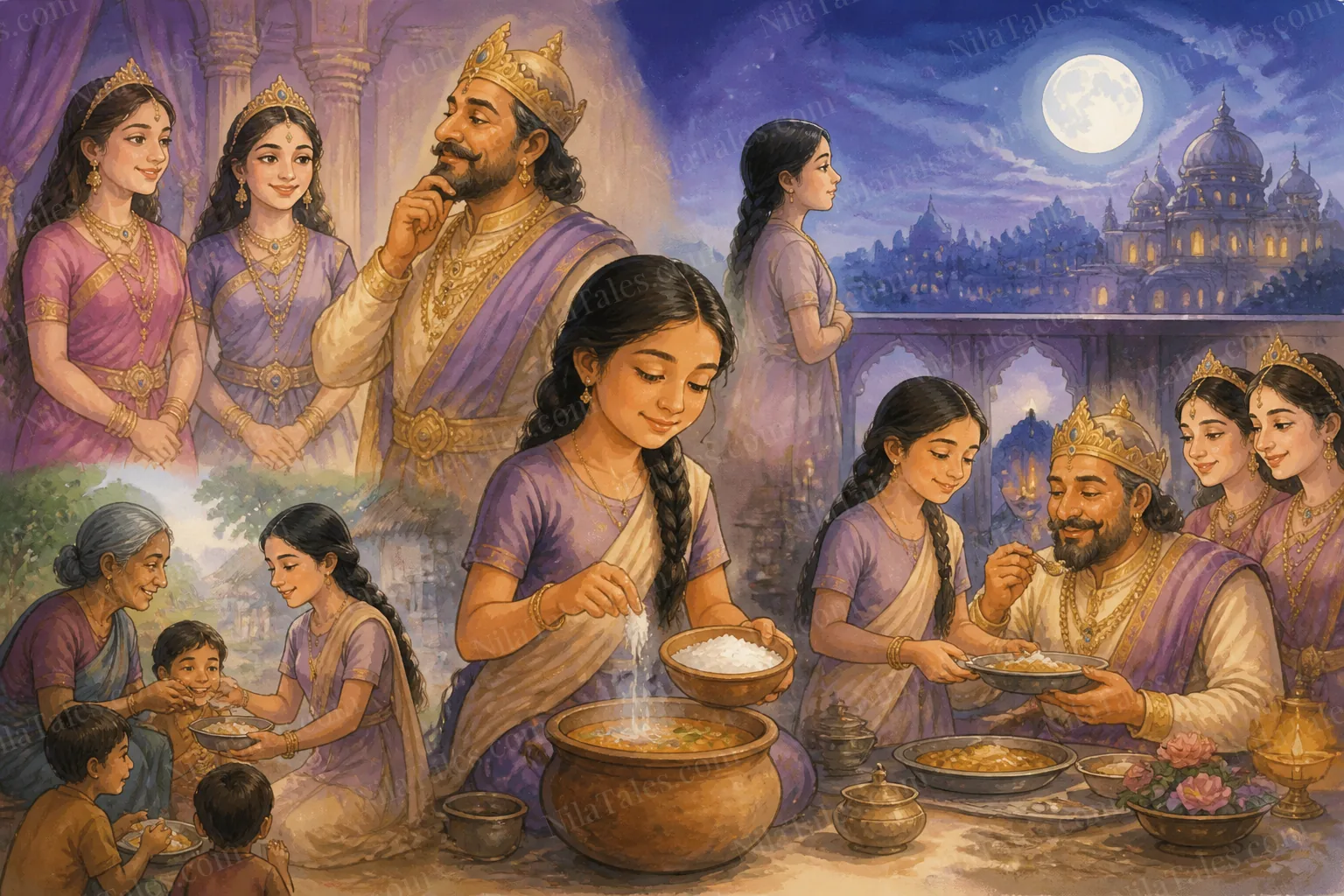
In a prosperous kingdom, King Vikram ruled with pride. He had three daughters, each unique in her own way. While the elder two were celebrated for their beauty and grace, the youngest, Meena, was known for her quiet wisdom.
One afternoon, the King decided to test his daughters' affection. He called them to the grand hall and asked, "Tell me, how much do you love me?"
The eldest daughter stepped forward and said, "Father, I love you as much as gold is precious!" The King beamed with pride. The second daughter followed, saying, "I love you as much as diamonds are bright!" The King felt truly honored.
Then came Meena. She looked at her father and said softly, "Father, I love you as much as salt is essential to food."
The King’s face turned red with anger. "Salt? You compare me, the mighty King, to a common, cheap seasoning?" he roared. In a fit of rage, he banished Meena from the palace, ordering her to live in the wild forest.
Meena, though heartbroken, obeyed. She found shelter in a small cottage belonging to a kind forest hunter. She helped him with daily chores and lived a simple life.
Months later, the King went hunting in the same forest. He lost his way and became exhausted and famished. Thirsty and weak, he stumbled upon a small hut. It was the hunter's home. The hunter recognized the King and welcomed him with great respect.
Meena prepared a warm meal for the King. However, remembering her lesson, she prepared the food without a single grain of salt. As the King ate, he realized something was terribly wrong. "Why is this meal so tasteless?" he asked in frustration.
The hunter replied gently, "Your Majesty, do you now realize how vital salt is to life? Gold and diamonds are beautiful, but they cannot nourish a hungry man."
The King felt a deep sting of regret. He realized that in his greed for grand praise, he had cast away the one who understood his true necessity. He apologized to Meena and brought both her and the hunter back to the palace to live in honor.
Moral
Never underestimate the value of simple things; they are often the most essential.